The Institute for Environmental Learning (IEL) is passionate about community engagement and continuing education and an important part of our work is in the development and delivery of innovative instructional programs that have been offered off-campus in partnership with surrounding communities. This collaborative program has expanded to include interdisciplinary collaborations with a variety of community partners. The following is a list of the programs the Institute currently offers:
Átl’ka7tsem (Howe Sound)
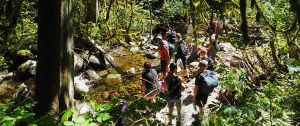
This field school is offered near Vancouver each May/June in partnership with the Howe Sound Biosphere Reserve Initiative (HSBRI) and the Squamish Education department. The program is conducted on six consecutive (intensive) weekends throughout the Sea to Sky corridor and the UNESCO Biosphere Region. Students enrolled in this collaborative field school are included in a diversity of activities in the field. During this urban course, students visit a variety of environmentally and culturally significant sites. Through a variety of critical experiences and reflection, students learn about the magnitude and complexity of environmental issues, about how urban communities function, and further, what role they individually play ‘in the mix’.
Haida Gwaii (Massett and Skidegate)
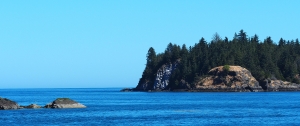
This collaborative field school takes place on the North coast within the context of Haida Gwaii each August and features professional development opportunities for a wide variety of educators. The field school is supported (in kind) by representatives from the Council of the Haida Nation, Skidegate Band council and the IEL. For more than 20 years Indigenous communities on Haida Gwaii have been a unique context for informal and formal educators to work at tackling issues in rural, resource based communities: mapping out how rural and Indigenous communities function and the implications of this for teaching and learning. Students engage in nature experiences: developing leadership skills and cultural sensitivity that contribute to the unique learning environment that is the signature for this course. ELSE 452 2026 Haida Gwaii (draft)
To register in our next course (Aug. 4-16, 2026), click here!
Tl’elhum (Salt Spring Island)
This study program is under development and will be offered July 2027.
Amazonas (Leticia, Colombia)
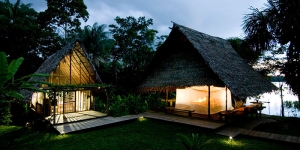
This field school will typically be offered during two weeks in March in a partnership with the IEL and local NGO’s in Colombia. As part of their studies, students engage in an intensive interdisciplinary field study in the Amazon Rainforest of Colombia as part of the Calanoa Project: an environmental and cultural learning centre near Leticia, Colombia. Here, they participate in cultural and creative immersion activities, assist with community development and conservation projects, and contextualize their field learning by classroom-based analysis and critical reflection before and after field experiences. The field school offers students the opportunity to travel to the Amazon rainforest, participate in a multitude of interdisciplinary and cultural experiences, and bring to their studies a renewed depth, purpose, and global awareness. During the two week field school, participants experience a range of local field trips exploring the unique biological and cultural diversity of the Amazon basin.
Arusha (Tanzania)
This study program is currently under development (dates TBA).
Sulawesi utara (Indonesia)
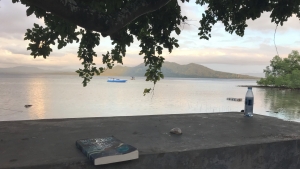
This study program occurs within the context of Manado, North Sulawesi in eastern Indonesia. It is sponsored jointly by the UNESCO co-chairs in Bio-Cultural Diversity and Education as well as the IEL. Students participating in the Indonesia (SPICE) field school will depart for Indonesia typically for 3 weeks during July. The field school has been offered roughly once every 2 years since the fall of 2009. The program is offered in partnership with Universitas Sam Ratulangi (UNSRAT). Topics in the field school include history and geopolitics of the region, tropical botanical studies, ethnobotany and marine ecology. Students live and work together interacting with local academics, teachers and schools in a variety of areas including the volcanic highlands, urban Manado and Bunaken Island’s coral reefs.