
Abigail Nyamu – Communications Coordinator
Abigail Nyamu is the Communications Coordinator for the institute handling our email and social media accounts. She is a recent graduate of Simon Fraser University, holding a BSc in Environmental Science and Sustainable Development. She is passionate about the intersection of society and nature, and how these relationships shape our environment. For inquiries about the institutes programs or research collaborations, including the newly approved Certificate in Environmental Learning and Leadership, please contact Abby at (info@eco-learning.org).

Shannon Leddy (Métis) – Director
Dr. Shannon Leddy is a card-carrying member of the Métis Nation of BC and an associate professor of art education at the University of British Columbia, whose practice focuses on transformative pedagogies in decolonizing and Indigenizing teacher education. Her research sits at the intersection of Indigenous, art-based and sustainability and aims at uplifting Indigenous voices and knowledges within educational practices. She is Co-Chair of the Institute for Environmental Learning, and a Research Fellow with the Institute for Public Education/BC. Her book, Teaching where you are: weaving slow and Indigenous pedagogies, written with Dr. Lorrie Miller, is available from the University of Toronto Press.

David B. Zandvliet – Founding Director
Dr. David Zandvliet is a Professor and UNESCO Chair in the Faculty of Education at Simon Fraser University in Vancouver, and the founding Director for the Institute for Environmental Learning. He has also held Associate memberships in the Faculty of Science and Faculty of Environment at SFU. An experienced researcher, he has published articles in international journals and presented conference papers on six continents and in over 17 countries. His career interests lie in the areas of science and environmental education with a focus on the study of learning environments. He has considerable experience in the provision of teacher development and has conducted studies in school-based locations in Australia, Canada, Malaysia Sri Lanka and Taiwan. David leads environmental education programming at SFU including directing field schools in diverse locations including: Vancouver, Haida Gwaii, Australia, Hawaii, Indonesia and Tanzania.
Advisory Committee

Paola Ardiles
Dr. Paola Ardiles Gamboa (she/hers) is a Senior Lecturer at Faculty of Health Sciences and Special Projects Advisor for the Vice-President of People, Equity and Inclusion at Simon Fraser University. She is a practitioner scholar who has been recognized for her innovative, collaborative and inter-sectoral approaches in health promotion research, policy, practice and education. Her passion is to build partnerships and facilitate dialogue in order to foster the development of practical and creative upstream solutions to tackle complex public health challenges. Since 2015, Paola has been at Simon Fraser University developing participatory and community-based experiential courses including the co-design of Health Change Lab and Surrey CityLab, in collaboration with SFU RADIUS, City of Surrey, Fraser Health and many community-based organizations.

Hart Banack
Dr. Hart Banack- Hart has worked as an in/formal educator since he was 17, teaching swimming levels, guiding canoe trips & certifying canoe levels, teaching first aid, teaching English as a Second Language, teaching high school Science, running outdoor-based non-profit organizations and preparing in-service and pre-service teachers. Hart holds a B.Ed. in Environmental Education from Simon Fraser University (SFU), and a master’s and PhD in Philosophy of Education, also from SFU. Hart is a founding member of the HOPE-Ed (health, outdoors, physical and experiential education) area in the Faculty of Education at UBC, along with being the lead faculty for outdoor environmental education since 2014. Currently, Hart is an Assistant Professor in the School of Education at the University of Northern British Columbia (UNBC). Research interests include: outdoor learning, experiential learning, and considerations of where learning takes place. Hart has been involved with the IEL since 2015.
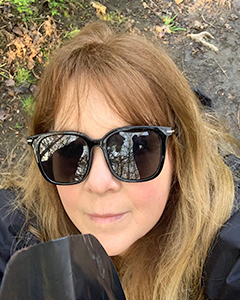 Donna Boucher
Donna Boucher has been a teacher for over 16 yrs. Her farm background and outdoor interests guided her to a BSc degree in Biology and Anthropology at Trent University in Peterborough, Ontario and early career work in wildlife biology. After moving to BC, she continued her education at SFU, completing a B. Ed with an Environmental minor. She joined EEPSA at that time and has continued to be actively involved in teacher engagement /pro-d activities, as well as serving as EEPSA secretary for the past nine years. Donna recently completed her Graduate Diploma in Nature and Place-based Learning through SFU and encourages her students to connect with their local environment through a variety of outdoor learning experiences.
 Connie Cirkony
Formerly with the Green schools Division of the BC Ministry of Education, Connie Cirkony is a lecturer in science education at the University of Tasmania (Australia). She is an experienced educator and researcher with expertise in science, STEM, and sustainability education as well as evidence-informed policy and practice. Her lifelong love of the outdoors inspired her initial career as a biologist and her commitment to integrate environmental learning in her teaching and research.
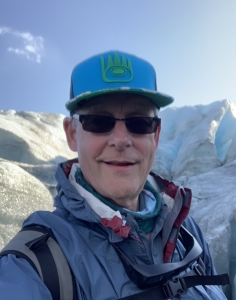 Victor Elderton
Victor was a teacher and Principal Co-Administrator for the North Vancouver Outdoor School (re-branded as the Cheakamus Centre) 1984 – 2013. In 2017 Victor became a PhD student in Education Theory and Practice at SFU with a focus on the lasting impressions and impact that Outdoor School experiences and learning have on students that have attended over the past 50 years. In September 2018 Victor began work as a Faculty Associate at UBC within the Education for Sustainability Cohort. Victor continues to consult and volunteer for NVSD, throughout the Lower Mainland and internationally through initiatives that support, enable and enhance capacity in “Learning with Nature as co-teacher in Place, through Experience and the more than Human”. He is a member of various environmental, education and sustainability committees as well as working groups; including Environmental Educators of BC Society ( Walking the Talk), Association of Nature Center Administrators (ANCA), NatureKids BC, VancouverMetro Education Advisory Committee, North Vancouver and Archives Commission, past member of BC Premier’s Citizen’s Conservation Council and a founding Director of Pacific Foundation for Understanding Nature Society.
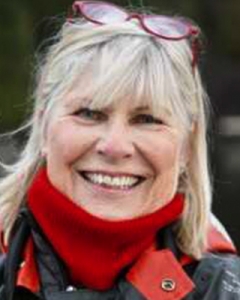 Ruth Foster
Director of Pacific Wild Life Foundation
Ruth Foster is a retired teacher who has been nationally recognized as one of Canada’s foremost environmental education specialists. She serves on the executive of several societies and is a field instructor with Simon Fraser University’s Faculty of Education International Studies program
 Carrie Froese
Carrie Froese has worked in three school districts in BC, SFU, the Fuyang Bureau of Education in China, and most recently as an educational consultant in Vancouver. She is a strong advocate for the social, emotional, physical and intellectual benefits of learning outdoors. Her professional learning is strongly rooted in teacher research and the inquiry process as defined by Maureen Dockendorf, Judy Halbert and Linda Kaser. She has seen the power of cross-curricular outdoor learning to inspire joyful learning, a love of nature, and the investment in caring for the environment in a positive, proactive way. She has been on the Steering Committee of Wild About Vancouver, a branch of the IEL, since 2015. She is also the president of the BC Literacy Council of the ILA, providing scaffolding to the next generation of educators passionate about literacy. She was active in the BC Principals Vice Principal’s Association, supporting and solidifying her leadership skills and sharing out her learning. Most recently, her consulting work is centred around empowering children and youth in their learning through the development of structures, communication, curriculum, and staff development.
 Lucie Gagné
Dr. Lucie Gagné is an award-winning designer with broad experience in interior / architectural design. Ms. Gagné has been teaching in the School of Design at Kwantlen Polytechnic University since 1998. In addition to teaching, she is the coordinator of the Interior Design program; she has been involved in the establishment of international partnerships and exchanges, and conducted field study educational travel to a number of international destinations. She is interested in the possibilities that can result from the spontaneous collision of ideas when people from differing backgrounds and experiences collaborate; and in the integration of diverse and global approaches in making informed connections across disciplines and international boundaries. Her research interests focus on the practices of experiential learning within a non-formal, cross-cultural, and global context; and the interrelationship between pedagogy, people, and place.
 Kshamta Hunter
Kshamta Hunter is a PhD candidate in the Department of Curriculum and Pedagogy at the University of British Columbia (UBC) and a manager of Sustainability Student Engagement with the UBC Sustainability Initiative. Kshamta’s PhD research aims to investigate operationalization of leadership capacity and competencies associated with social innovation toward addressing uncertain and complex issues related to the Sustainable Development Goals. With over ten years of experience in sustainability education, she is passionate about youth engagement and activism; and is always looking for innovative ways to foster involvement, critical dialogue and learning with a multidisciplinary approach.
 Maureen Jack-LaCroix, Ph.D.
Maureen is an environmental educator, curriculum designer, researcher, workshop facilitator and speaker with over 15 years’ experience designing and delivering programs for teachers and students in secondary schools and workshops in community and workplace. As the founder and Creative Director of Be the Change Earth Alliance, she has activated tens of thousands of individuals to make positive environmental behaviour change by connecting global issues to lifestyle choices and personal actions. Maureen’s love of Earth and all things wild and beautiful fuels her passion for social change. As a researcher and recent graduate of the Philosophy of Curriculum Design and Implementation in the Faculty of Education at SFU, Maureen brings the intersectionality of indigenous, environmental and social justice education into focus within the participatory action research work she facilitates through BTCEA with passionate teachers, students and administrators keen to participate in the decolonization movement of the 21st century by transforming the education system.
 Ruth Joy
Dr Joy’s research interests are in modelling aspects of the marine environment. She has worked on developing statistical models that assess the relative impact of anthropogenic stressors on marine species-at-risk in oceans around the world. She has recently been focusing her research on ways to reduce potential impact of underwater noise and commercial vessel traffic on the foraging habitat of the endangered southern resident killer whale.
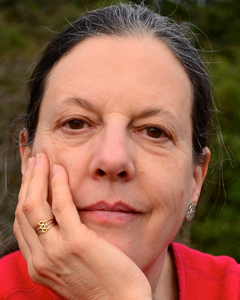 Luisa Maffi
Dr. Luisa Maffi (PhD – Anthropology, University of California, Berkeley, 1994) is co-founder (1996) and Director of Terralingua (https://terralingua.org), an international nonprofit devoted to sustaining biocultural diversity. She pioneered the concept of biocultural diversity and spearheads Terralingua’s projects, which span research, policy, education, and on-the-ground work. She is also the Editor of Terralingua’s flagship publication, Langscape Magazine, a unique venue for authentic biocultural stories, told by Indigenous and non-Indigenous people from all over the world who live and breathe the situations they describe. With a background in linguistics, anthropology, and ethnobiology, Luisa has conducted fieldwork in Somalia, Mexico, China and Japan, as well as worked with First Nations in British Columbia. She is an International Fellow of the Explorers Club (New York). In her work with Terralingua, she has been active in the international arena, promoting biocultural diversity policy and practice through collaborations with international organizations such as IUCN, UNESCO, UNEP, and the Convention on Biological Diversity.
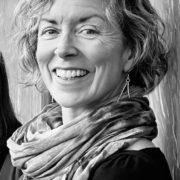 Bridget McClarty
Bridget McClarty is an environmental educator, researcher, and doctoral candidate in the Faculty of Education at Simon Fraser University. She brings over 15 years of experience teaching secondary school biology and outdoor education across British Columbia, Yukon, and Alberta. She has also served as a faculty instructor and field educator with Capilano University’s Outdoor Recreation Management Program, the University of British Columbia’s Teacher Education Program, and the British Columbia Institute of Technology’s Fish, Wildlife, and Recreation Program.
 Daniella Roze des Ordons
Daniella Roze des Ordons, PhD, RCC is a settler of French and Polish ancestry dedicated to advancing education that fosters more connected, just, and flourishing human and more-than-human communities through land-based, anti-oppressive, and decolonial practice. As a community-engaged researcher, practitioner-scholar, and Registered Clinical Counsellor, her doctoral research examined nature-based education and ecotherapy programs as sites for advancing critical eco-social justice. Daniella is currently a post-doctoral fellow working in collaboration with the University of Victoria and W̱SÁNEĆ Nations, where she explores the role that ÁLEṈENEȻ (Land-based learning) has in decolonizing and Indigenizing educational systems and fostering movement towards regenerative, resurgent education. She is also the founder of Thriving Roots Wilderness School and a consultant with Human Nature Counselling Society, with a passion for place and land-centred programs that contribute to environmental, social, and personal systems transformation.
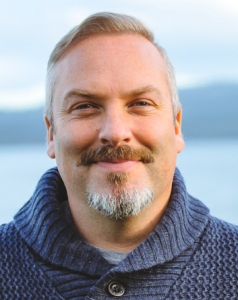
Carlos Ormond
Dr. Carlos is the Director of the Haida Gwaii Institute (HGI), which is a community-based post-secondary institution located on Haida Gwaii, the traditional, ancestral and unceded territory of the Haida people. With a mission of shaping the future by sharing Haida Gwaii with the world, HGI develops and delivers transformative education inspired by Haida Gwaii. Its programs offer participants from Haida Gwaii, across Canada and beyond, immersive, experiential learning opportunities in rural, resource-dependent communities in transition. Here the Haida Nation, island communities, and provincial and federal governments are working through complex co-management models towards reconciliation and sustainability. HGI is governed by the Haida Gwaii Higher Education Society (HGHES) and the University of British Columbia Faculty of Forestry. HGI welcomes partnerships with other institutions, organizations and agencies that share a focus on the local and the global.
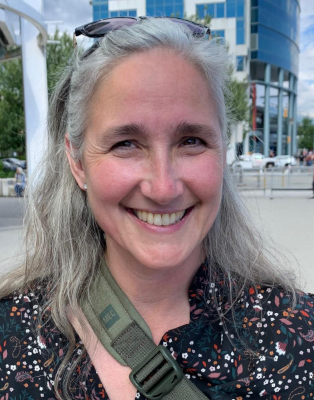 Alisa Paul
Alisa Paul is beginning her PhD in Learning Environments and will be working in teacher education at UBC in the Sustainability cohort. She completed her M.Ed in 2019 at SFU in Ecological Education and worked in teacher education at SFU, primarily with the SEEDS and French Modules. Her passion for community building and resiliency form part of her personal pedagogy. Learning is relational and Alisa center’s her approach on connecting students to their local places and acknowledging the systems that they are engaged in. She hopes to continue to explore how learning environments are connected to narrative and support the process of teacher development.
 Jessica Pilarczyk
Dr Pilarczyk aims to understand how coastal systems have been altered by both extreme events (storms, tsunamis) and gradual environmental changes over the Holocene. Her objective is to extend the short-term instrumental record, and through this improved understanding of impacts and processes, enhance our ability to forecast how coastal systems will respond in the future. Many of the best reconstructions of coastal systems have been derived from sedimentological and paleontological proxies. Dr. Pilarczyk primarily uses sedimentary, geochemical, and microfossil evidence to better understand the paleo-record in a variety of coastal systems (temperate, tropical, and arid environments). Her current research interests fall into, but are not limited to, three broad themes: (1) the application of microfossils in monitoring and reconstructing coastal environments, (2) the role of storms and tsunamis on coastal evolution, and (3) the assessment of the risk of future great earthquakes along subduction zone coastlines using paleoseismology. Dr. Pilarczyk is looking for graduate students interested in developing long-term records of coastal hazards including earthquakes, tsunamis, and storms

Sarah Rosengard
Sarah Rosengard is an ocean scientist and Lecturer in the School of Environmental Science at Simon Fraser University. Originally from Queens, New York, she has had the privilege to learn and grow from researchers and community leaders spanning New England to Vancouver, and the Amazon River Basin to the Canadian Arctic. Since completing her PhD in ocean carbon cycling at MIT-Woods Hole Oceanographic Institution, she has pursued deeper interests in community engagement through research by working for or collaborating with organizations like the Arctic Eider Society, Friends of the Chicago River, and Teens Take on Climate. Over the past five years, she was a professor at the School of the Art Institute of Chicago, where she researched the local geochemistry of the Chicago River, and explored the role of art in environmental knowledge production and science education. She once lived in Vancouver as a postdoctoral fellow at the University of British Columbia, and is excited to return to the region now as an environmental science lecturer at Simon Fraser University. While Sarah has had experiences supporting research and field work on a global scale, she is eager to use her time at SFU to understand what it means to conduct research at a more local scale, learn from the communities around us, and contribute to a curriculum for urban environmental science within the School.
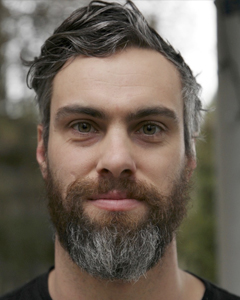 Nick Stanger
Dr. Nick Stanger works as an associate professor of environmental education at the College of the Environment at Western Washington University. His research uses an educationalist lens and participatory techniques to understand environmental sociology, ecological identity, transformative places, and Indigenous responses to climate change. He pursues projects that utilize his unique background as an ecologist, conservationist, educator, and knowledge mobilizer, and look for ways to support participants and provide nuance and complexity to pressing issues. He aims to understand, mobilize, and help create space for Indigenous communities to tell their stories of resurgence, cultural adaptation, and sovereignty all while helping find pathways, protocol, and critical understandings amongst settler-colonial communities.
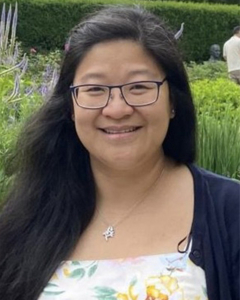 Poh Tan
Dr. Poh Tan is a research associate with the IEL and a lecturer at Emily Carr University of Art and Design. She is of Malaysian-Nyonya descent and is a published scholar in the fields of education and science, encompassing roles as a scientist, educator, entrepreneur, and mentor. Dr. Tan holds a PhD in Experimental Medicine from the University of British Columbia and a PhD in Educational Theory and Practice from Simon Fraser University. Her research focuses on how traditional science teaching practices can be decentered from an Indigenous perspective. Her work currently focuses on action research with the Vancouver Botanical Gardens Association (or VBGA). Her research also extends to understanding public science engagement through storytelling and Indigenous perspectives at Science World. Dr. Tan’s contributions include creation of Bloedel Conservatory’s first virtual and hybrid classroom experiences with curricular aligned resources, and contribution to the development of Science World’s environmental trail for public science outreach on the history of False Creek.
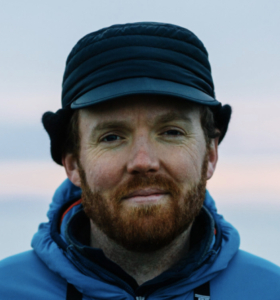 Nick Townley
Nick lives, works, and adventures on the shores of the Salish Sea. He teaches with the Vancouver School Board’s TREK Outdoor Education Program, a grade 10 integrated district program. Nick is an Adjunct Professor with the Faculty of Education at the University of British Columbia. He is the president of EEPSA (Environmental Educators’ Provincial Specialist Association of BC), a director of Classrooms to Communities, a director of Take Me Outside, and the past BC director of the Outdoor Council of Canada. He holds a Master of Arts in Environmental Education and Communication, from Royal Roads University..
 Ruth Waldick
Dr. Ruth Waldick is a Canadian ecologist and climate risk researcher whose work spans science, policy, and community action. She held scientific roles with the federal government at Agriculture and Agri-Food Canada (AAFC), Natural Resources Canada (NRCan), Environment and Climate Change Canada (ECCC), and the Privy Council, focusing on climate impacts and socioecological resilience. Her academic and scientific approaches to problem solving have led, more recently, to climate risk and resilience work in coastal BC, and the formation of the Climate Adaptation Research Lab Society (CARL). Her aim is to advance community-based approaches to ecosystem restoration and climate adaptation in coastal British Columbia. She is pleased to be working with a passionate and skilled team of restoration ecologists building resilience to climate change using ecosystem-based solutions. Over the past four years, her team has been contributing to the development of a experiential science program at the High School and elementary levels, to give students the opportunity to learn the scientific method through field, lab and classroom learning.
In Memoriam
 Milton McClaren
Dr. Milton McClaren was an Emeritus Professor of Education at Simon Fraser University and is widely regarded as the founder of Environmental Education in British Columbia. He was also an Adjunct member of the School of Environment and Sustainability at Royal Roads University. Milt was also a recipient of the B.C. Minister’s Environment Award, the Canadian EECOM Award, the Canadian Wildlife Federation’s Certificate of Merit, and the Order of Canada for his work in the field of environmental education. For his longstanding and deep commitment to the work of the Institute, the Milton McClaren (M²) Environmental Library was founded in 2025. His legacy in the field will live on.
.